• Skip to primary navigation
  • Skip to main content
  • Skip to primary sidebar

Heritage and History

Buildings, plants, food and family history, culture and heritage ...

  • Contents
    • Downloads
  • Contact us
    • Website creation tools
    • About us
    • Privacy
  • Books on history, culture and heritage
  • Cookie policy
  • Cookie policy (UK)
  • Show Search
Hide Search
Home/Architecture/Ritual burial theory overturned in Maryport

Ritual burial theory overturned in Maryport

Archaeologists and Roman experts may have to re-write history due to finds in Cumbria during a recent excavation.

The excavation, on land adjacent to the Senhouse Roman Museum in Maryport,  has yielded results which overturn the theory of the annual ritual burial of Roman altars at Maryport.

Tony Wilmott holding the altar fragment. Pic Hadrian's Wall Heritage

If the new theories are correct, experts will need to to re-evaluate similar theories at other Roman sites.

Led by Professor Ian Haynes and field archaeologist Tony Wilmott, the excavation of the remains of the Roman fort and civilian settlement was commissioned by the Senhouse Museum Trust.

These new excavations used documentation and physical evidence found during work undertaken on the site in 1870, which found Britain’s largest ever cache of Roman altars.

Camp Farm – Maryport

During the excavation work on Camp Farm, adjacent to the Senhouse Museum, a number of Roman pits have been excavated.

In the antiquarian fill of one of these pits a fragment of the corner of an altar was found. It featured a six-petalled rosette on one face and a circle on the other.

Members of the team compared the fragment with the altars in the nearby museum, and realised that it was from one of the stones dedicated by Marcus Maenius Agrippa, tribune of the first cohort of Spaniards, during the reign of Hadrian (RIB 823).

This altar stone was first recorded by John Horsley in the garden of Netherhall, where it was being used as the base of an ornamental sundial in 1725.

The presence of the fragment in the pit makes experts believe that the  altar was originally found in Maryport,  transported to Netherhall, without the small fragment, and then back to Maryport.
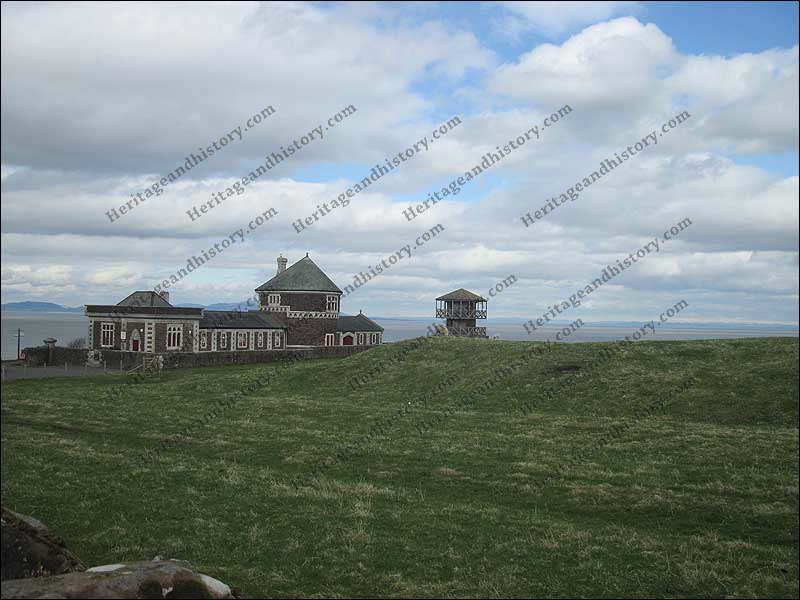
Senhouse Roman Museum overlooks  Camp Farm
Senhouse Roman Museum overlooks Camp Farm

Changing context

Given the position of latest find, within the depth of the pit excavations, leads experts to think that the altar had been reused as packing around a wooden post.

Although the archaeologists have not discovered the original context in which the altars stood when in use, they have shown the circumstances of their burial.

If this theory is proven, it raises some interesting new questions regarding the site, including what was a large timber structure doing on the top of this very prominent hill?

Peter Greggains, chairman of the Senhouse Museum Trust said: “The excavation has really brought the site to life.  The altars excavated in 1870 are an internationally important find because of the information they provide about the lives of commanding officers in the Roman empire.  Now we are beginning to see how the site here at Maryport developed too.”

Other discoveries

Fragments of two more altars not currently part of the collection in the museum, pottery from the late second to early third centuries AD and a few coins have also been found.

The team began work on site at the end of May, and will be excavating until Wednesday, 20 July, 2011.

July 18, 2011 by admin Leave a Comment

Filed Under: Architecture, Featured Tagged With: 22 July, Agrippa, Altar Stone, Altars, Archaeologists, Archaeology, Backfilling, Cohort, cumbria, Excavation, Excavation Work, Excavations, Excavators, Field Archaeologist, Fire Brigade, Fire Trucks, Fragment, Hadrian, Haynes, Humphrey, John Horsley, Museum Trust, Nbsp, Nearby Museum, New Interpretation, No3, Physical Evidence, Pits, Professor Ian, Prominent Hill, Roman Empire, Roman Museum, Roman Sites, Sandstone, Senhouse Roman Museum, Spaniards, Sundial, Timber Structure, Tony Wilmott, Weather

Reader Interactions

Leave a Reply Cancel reply

You must be logged in to post a comment.

Primary Sidebar

WWI Ruhleben Horticultural Society

Looking for Gardeners of Ruhleben

A story just published by Gardening For Health says the Royal Horticultural …

Continue Reading about Looking for Gardeners of Ruhleben

Sequoia Gigantea at Wrest Park

Perhaps the UK’s oldest recycled Christmas tree

Originally planted by the festively monikered Head Gardener of Wrest Park, …

Continue Reading about Perhaps the UK’s oldest recycled Christmas tree

Gowland Excavation 1901 (English Heritage Archive)

Who Built Stonehenge? Exhibition

A  special exhibition explores 800 years of debate about the creation of …

Continue Reading about Who Built Stonehenge? Exhibition

New Bells of Notre Dame Cathedral video

Hear the New Bells of Notre Dame

Just over 6 hours ago the new bells of Notre Dame Cathedral rang out exactly as …

Continue Reading about Hear the New Bells of Notre Dame

Staff member and inmates c 1927 Credit: National Trust

Women in the Workhouse exhibition

A fascinating ‘Women in The Workhouse’ exhibition opens on International Women’s …

Continue Reading about Women in the Workhouse exhibition

Footer

Copyright © 2026 ·Navigation Pro on Genesis Framework · WordPress · Log in

Manage Cookie Consent
We use technologies like cookies to store and/or access device information. We do this to improve browsing experience and to show (non-) personalised ads. Consenting to these technologies will allow us to process data such as browsing behaviour or unique IDs on this site. Not consenting or withdrawing consent, may adversely affect certain features and functions.
Functional cookies Always active
The technical storage or access is strictly necessary for the legitimate purpose of enabling the use of a specific service explicitly requested by the subscriber or user, or for the sole purpose of carrying out the transmission of a communication over an electronic communications network.
Preferences
The technical storage or access is necessary for the legitimate purpose of storing preferences that are not requested by the subscriber or user.
Statistics
The technical storage or access that is used exclusively for statistical purposes. The technical storage or access that is used exclusively for anonymous statistical purposes. Without a subpoena, voluntary compliance on the part of your Internet Service Provider, or additional records from a third party, information stored or retrieved for this purpose alone cannot usually be used to identify you.
Marketing
The technical storage or access is required to create user profiles to send advertising, or to track the user on a website or across several websites for similar marketing purposes.
  • Manage options
  • Manage services
  • Manage {vendor_count} vendors
  • Read more about these purposes
View preferences
  • {title}
  • {title}
  • {title}